What is Hypnosis for Anxiety?
If you are wondering whether hypnosis can help you overcome anxiety, the answer is yes. Many people find it helps them relax, calm racing thoughts and react differently to stress and challenges in life. In this guide you will discover how hypnosis works, what it feels like, and why it can be a great part of your anxiety recovery plan.
Contents
Who Is This For?
Hypnosis can be helpful for many different types of anxiety. Hypnosis may be helpful for general anxiety, stress, overthinking, panic attacks or anxiety about specific situations. You may find hypnosis helpful if you have:
- Feel tense and anxious a lot of the time
- Have racing thoughts and worries
- Have panic attacks
- Experience physical anxiety symptoms
- Want to feel calmer
- Are looking for a natural way to help you relax
Hypnosis works best as part of a broader approach to reducing anxiety. The best results come from carefully testing out the changes and seeing how you react differently. Gradually practicing the new calm responses you’ve learned from hypnosis can help train your mind to change the anxiety habit and feel confident and able to cope with challenges in life with ease.
If you want a complete guide to reducing anxiety step-by-step, including practical tips and techniques that you can use daily, read: How to stop anxiety
Why Anxiety Can Feel So Overwhelming
When we experience anxiety the sympathetic nervous system becomes activated, releasing adrenaline in preparation for perceived danger. This is known as the fight or flight response.
For people who struggle with anxiety, this response can become activated too often even when there is no real threat. With chronic anxiety, the body can become highly efficient at entering a state of tension, anxiety and panic.
This is one reason why anxiety can feel difficult to overcome. It begins in the mind, but it quickly becomes a physical reaction as well. Racing thoughts can trigger physical symptoms, and those symptoms can then create more fear. This process can form a cycle that repeats and can increase anxiety over time and make it feel like there’s no way out.
Often anxiety causes people to try to avoid the situations that trigger anxiety reactions for them, Unfortunately, avoidance tends to make anxiety worse. Each time you avoid a situation that causes you anxiety, your subconscious mind learns to associate the situation with danger. This reinforces the anxiety response. This can make the anxiety worse, and happen automatically as it becomes a habit response. Breaking this cycle is an important part of overcoming anxiety. Hypnosis can be very helpful in achieving this by helping you build a calmer, more confident response and learn to deal with situations that used to make you anxious, in a relaxed, confident way.
Taking control and calming both the mind and the body can help with practice, and is easier than it sounds. Using techniques such as breathing, positive self-talk and deep relaxation can help to regulate the nervous system. Hypnosis can support all of these processes by encouraging mental focus, physical relaxation, a calmer internal dialogue, and a changed reaction in day to day life.
How Hypnosis Helps Calm the Mind
Hypnosis is a focused and relaxed mental state. A typical hypnosis audio session begins with an induction which is the process of guiding you into physical and mental relaxation.
During this stage of hypnosis, your body may begin to feel heavier, and your thoughts may begin to drift rather than lingering. As the relaxation continues and deepens, you enter a hypnotic state where you remain aware and in control, but feel calm and inwardly focused.
In this relaxed state, positive suggestions are then introduced. The hypnotic suggestions are designed to help you change your anxious reactions and patterns, and think calmly. Often post-hypnotic suggestions are also used, which are intended to bring positive changes into everyday life after the session has ended.
Hypnosis is similar to meditation in that both involve quietening the mind and focusing on inner calm. However, hypnosis also includes structured positive suggestions, which can help influence automatic reactions.
In hypnosis for anxiety, the goal is to interrupt the cycle between anxious thoughts and physical stress responses. By creating a pause between a trigger and the anxiety reaction, you can more easily choose to breathe, relax and respond calmly rather than automatically entering a stress or anxiety state. This ability to create a mental pause is one of the key reasons hypnosis can be so helpful for anxiety.
Why Does Hypnosis Help Anxiety?
Anxiety is a normal response in certain circumstances, but if anxiety becomes an automatic learned response that happens frequently, it becomes a problem. Many everyday habits happen automatically, and unfortunately, anxiety can become one of those habits. It can be very frustrating, because even though your rational mind thinks there is nothing to fear, your body may still go into a fight or flight response. This is where hypnosis can help, because hypnosis works by influencing the subconscious mind where habit responses are formed.
Imagine if every time you join a meeting at work you get very anxious. If this keeps happening, the subconscious mind expects that anxiety before the meeting has even started. The anxious feeling happens automatically without you even consciously thinking about it. It’s a bit like when you are learning to drive and at first you have to consciously remember to put your foot on the brake when you see a red traffic light, but after driving becomes familiar, where you don’t have to think about it, your foot just moves automatically. When an anxious response becomes rooted in the subconscious mind like this, the anxiety or panic reaction happens automatically too.
When you relax very deeply and go into hypnosis, the subconscious mind can be influenced to consider a different response to interrupt the anxious habit reaction. In addition, the positive hypnotic suggestions can affect these reactions, helping you change them to calmer more positive ones. As the changes happen, you then find that situations that used to trigger you and make you anxious, become easier, and you feel much more calm and confident.
Repetition is an important part of changing any habit, because when the subconscious mind has learned an anxious response to the extent that it is an automatic reaction, to replace this reaction with a new calmer one will also need repetition. In between listening to the hypnosis audio, you may have opportunities to test out any changes and see if you feel calmer in situations that used to cause anxiety. Each time you notice a positive change, this further reinforces the new response. Repeated listening to a hypnosis audio for anxiety can reinforce the changes, making you less anxious, calmer and more confident of successfully changing the anxious habit response.
What Does the Research Say?
There have been many studies on the effectiveness of hypnosis for anxiety and the results are encouraging. Studies have found that hypnosis may reduce anxiety and improve relaxation for many people. Brain imaging studies have shown changes in areas of the brain involved in attention and emotional regulation during hypnosis.
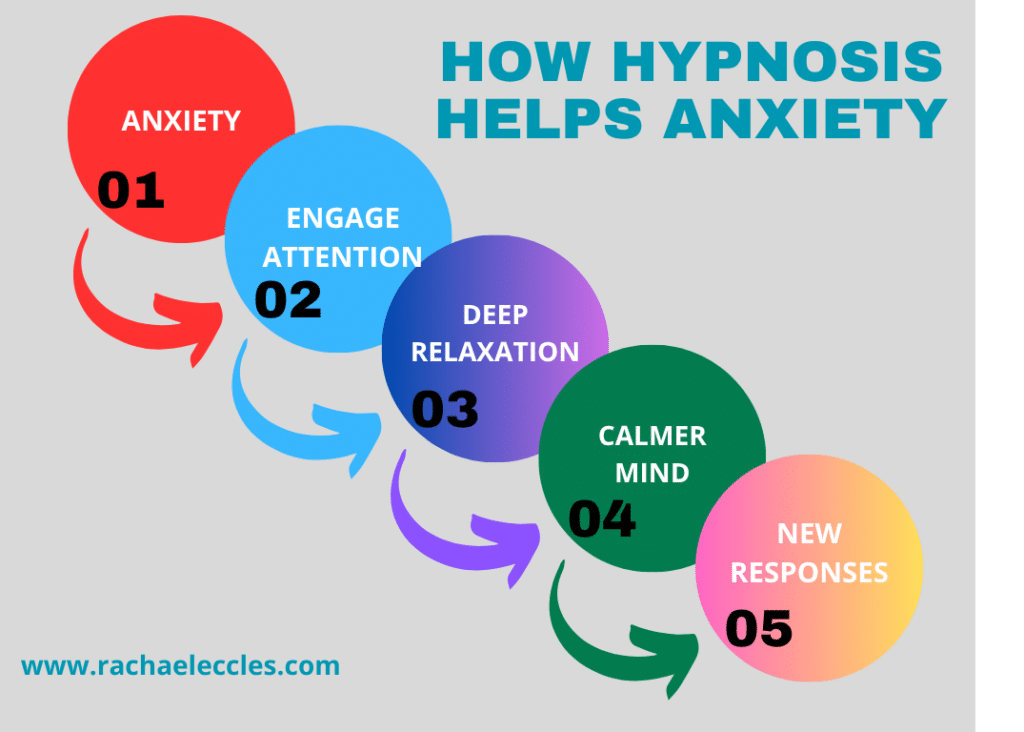
Researchers believe it helps due to the way it focuses attention and encourages deep relaxation because this makes it easier to develop calmer ways of thinking, feeling and reacting. Hypnosis can also be used alongside many other therapies and treatments. You can read more in this PubMed Review on The Efficacy of Hypnosis as a Treatment for Anxiety which concluded that hypnosis produced a significant reducing in anxiety symptoms in many participants compared with the control group.
What Can Hypnosis Do?
- Hypnosis relaxes your body
- Quietens racing thoughts
- Calms your mind
- Helps reduce physical tension
- Helps you learn calmer responses
- Makes calmer reactions happen automatically
What a Hypnosis Session Feels Like
During a hypnosis session when listening to a hypnosis audio most people feel deeply relaxed and very comfortable. You remain aware of what is happening and can hear everything.
Many people describe a sense of calm focus, similar to meditating or daydreaming. The body often feels heavier and more relaxed and the mind becomes calmer and quieter.
Hypnosis is not about losing control, it is about letting yourself relax while remaining conscious and aware.
During hypnosis you may notice:
- Your breathing slowing
- Your thoughts drifting
- Deep relaxation
- Your arms and legs feel heavy
- Feeling calm and peaceful
- Being less aware of time passing
Meditation vs Hypnosis
| Meditation | Hypnosis |
|---|---|
| Relaxation | Relaxation |
| Mindfulness | Relaxation + Positive Suggestions |
| Observe thoughts | Change thoughts and responses |
| Guided or self-directed | Guided |
How to Get the Best Results
Hypnosis can help you reduce anxiety but it works best if you:
- Find a quiet place
- Use headphones or earbuds
- Don’t try too hard to be “hypnotized”
- Listen daily
- Persevere for 21 to 30 days
Ready to Experience Hypnosis For Yourself?
If you’d like to experience hypnosis for yourself, you can listen to my free 15 minute hypnosis session designed to help calm anxiety and relax the mind.
If you are new to hypnosis don’t worry it’s really easy. All you need to do is find somewhere comfortable, ideally where you wont be disturbed, then simply relax and listen. Follow the guidance and let yourself relax, you will find it gets easier with practice and you relax more deeply as it gets more familiar.
When Hypnosis May Be Especially Helpful
Hypnosis can be especially helpful when anxiety manifests as racing thoughts, overthinking, physical tension, sleep issues and performance related nerves.
Because hypnosis works by encouraging deep relaxation and calmer thinking, it can help people reduce stress responses and gain more control over their triggers and their reactions.
Many people find hypnosis useful in times of stress, when stepping outside their comfort zone or when experiencing major life changes, such as job interviews, relationship challenges or personal transitions.
Final Thoughts
Anxiety is something many people experience and it can feel overwhelming when racing thoughts and physical tension begin to build. The good news is that there are supportive techniques that can help calm both the body and the mind.
Hypnosis is one such approach that may encourage deeper relaxation, calmer thinking patterns and greater control over stress responses. By creating a space for focused relaxation and positive suggestion, using hypnosis for anxiety relief can support these changes and encourage a more balanced reaction in everyday life.
Recovering from anxiety is usually not about fixing one thing, it is a gradual process of changing habit reactions and building confidence. Using self hypnosis can become a positive habit for you that enhances your relaxation, helps you become a calmer person and helps you build the confidence that you can cope with any challenge life brings, and remain calm and confident.
If you would like to experience this for yourself, you are welcome to try my free guided hypnosis session.
If you would like to find out more of how to recover from anxiety you may find our comprehensive guide on How to Recover From Anxiety very helpful.
Common Questions About Hypnosis for Anxiety
Does hypnosis actually work for anxiety?
Yes, Many people find hypnosis helps them reduce anxiety by helping them become better at relaxing deeply, thinking in calmer ways and responding differently to situations that used to be difficult. Research into hypnosis for anxiety offers encouraging results, some studies indicates that hypnosis does reduce anxiety.
People who experience anxiety are often already in a heightened state of stress much of the time. When a trigger occurs, the reaction feels intense, because the nervous system is already in a state of alertness, because long-term or chronic anxiety can result in an overactive sympathetic nervous system.
In addition to the calming relaxing effects of hypnosis, the positive suggestions help create a space for change to happen in thinking patterns and responses. Overcoming anxiety is usually not something that happens overnight, but with consistent practice many people find they feel calmer and more confident in situations that used to trigger anxiety.
How often should I listen to hypnosis for anxiety?
Ideally, listen to your hypnosis audio every day for about 3 to 4 weeks. This regular repetition allows you to relax more deeply as the process becomes familiar and easier to follow, and the repetition of the hypnotic suggestions help to reinforce the positive changes and establish new calmer responses. For some people there are immediate benefits, but sometimes the full results take time to build.
Is hypnosis safe?
Yes. Hypnosis is generally considered safe when used for wellbeing purposes. Hypnosis is very similar to meditation and is designed to be calming and relaxing. You will still be aware and conscious during hypnosis, you remain in control during hypnosis, but you will feel very relaxed.
You cannot be made to do anything against your will under hypnosis and you can choose to stop the process any time you want to. If you heard a suggestion that didn’t feel right for you you would simply reject it.
If you have any mental health concerns it would be best to speak to a healthcare professional before beginning self treatment such as hypnosis or any other practice.
People with as certain form of epilepsy where deep relaxation or sleep may trigger seizures should check with their doctor or neurologist practicing hypnosis, relaxation techniques or meditation.
Because hypnosis usually involves closing your eyes and relaxing deeply, it should never be practiced while driving, cycling or doing anything that requires your full concentration. Always choose a time when you can relax and be undisturbed. Find out more by reading my article Is Hypnosis Safe?
Will I lose control during hypnosis?
No. During hypnosis you remain aware, conscious and in control throughout the session. You cannot be made to do anything against your own values and wishes. If you did hear a suggestion and didn’t like the sound of it you would simply reject it. You are also free to stop the hypnosis session any time you choose.
People often describe hypnosis as being similar to a daydream or that focused state you may experience when watching a compelling movie or reading a good book. You may notice that physically you feel very relaxed in hypnosis but your mind is still aware and you may even remember most of the session afterwards.
Can I practice self-hypnosis at home
Yes, many people successfully practice self-hypnosis at home using hypnosis recordings. Listening in a relaxed, comfortable and quiet environment helps you relax as you follow the guidance on the recording. This makes it easy to experience the benefits of hypnosis without having to leave home and visit a therapist in person.
Our hypnosis downloads are designed to guide you step by step into a calm hypnotic state with the convenience, comfort and privacy of being in your own home. Many people use headphones or earbuds to reduce distractions and help them fully focus and be absorbed in the experience.
Self hypnosis gets easier with practice. Many people find they relax more deeply and get greater benefits from hypnosis as they become more familiar with it.
Can everyone be hypnotized?
Most people can be hypnotized but the depth of hypnosis varies from person to person. If you want to try hypnosis the most important thing is to follow the guidance, keep an open mind and allow yourself relax as much as you can.
Some people go into hypnosis quickly and easily but other people find it harder to relax and let go the first few times. Becoming more familiar with the process through practice can help. Hypnosis is something you can learn to get better at. The more familiar you become with it the easier it gets to relax and enjoy the benefits of hypnosis.
Hypnosis is not something that is done to you, it is something you need to actively participate in it. Hypnosis is a state of focused attention which is often but not always accompanied by a feeling of deep physical relaxation. If you are willing and you want to try hypnosis, simply follow the guidance and try it for yourself. Using a hypnosis audio, practicing several times will help you experience a mental state that feels right to you.
If you are curious about how easily you can be hypnotized try my free quiz How Hypnotizable are You? To find out about you natural hypnotic suggestibility.
How quickly does hypnosis work
For some people the effects of the hypnosis may noticeable after the first session, but for others the changes develop gradually. Everyone responds differently, and results often develop and improve with regular practice.
To get the most benefit from your hypnosis audio, we advise listening to the audio at least once a day for about 21 days (three weeks). This allows you to become more familiar with the process and helps to reinforce the hypnotic suggestions through repetition. You may find that your mind begins to react in calmer ways automatically.
After the initial 3 weeks, many people continue to listen to the hypnosis whenever they feel they want to reinforce the effects or enjoy a relaxing, calming experience.
Continue Your Anxiety Recovery
Stress and anxiety often go hand in hand. Explore my Anxiety Hypnosis Downloads & Guided Meditations for additional hypnosis recordings, guided meditations and practical self-help resources covering stress, panic attacks, worry, sleep and much more.
How to Reduce Anxiety – Practical Guide
Anxiety Hypnosis Hub – All anxiety related articles and products are listed here.
If you would like to understand more about hypnosis you may find these helpful:
- What is hypnosis
- How does hypnosis work
- What does hypnosis feel like
- Is hypnosis safe
- Can anyone be hypnotized
For more answers, if you still have questions, you can visit the hypnosis FAQ page.
Rachael Eccles is the creator of over 740 hypnosis and meditation recordings and one of the UK's largest hypnosis and meditation audio catalogues. Since 2006, she has helped people worldwide through professional hypnosis, meditation and personal development recordings.
Rachael is an Advanced Certified Clinical Hypnotherapist with over 20 years' experience and is registered with the GHR, GHSC and CNHC.
Her work has been featured on BBC Radio, Hello! magazine and other media publications. She writes about hypnosis, meditation, wellbeing and personal development.