What is Anxiety?
Anxiety is something everyone experiences from time to time, and in many situations it is a completely normal response. However, if anxiety becomes frequent, overwhelming or seems to appear for no reason and affects everyday life, it can leave you feeling exhausted and confused about why you feel the way you do. The good news is that anxiety is highly treatable using a range of natural self help methods, therapies and lifestyle changes. Anxiety can be reduced significantly, helping you regain control and confidence.
In this guide you will learn the causes of anxiety, how it may become a habit, and many practical ways you can reduce and control it. You will find out how mindfulness, meditation and hypnosis may help you get your confidence back and be free from anxiety.
Anxiety Vs Fear
Fear usually occurs when there is a real and immediate danger present. Anxiety is often more of an anticipation of something dangerous or difficult that might happen. Because anxiety does not require there to be an immediate risk or danger, anxiety can happen at any time and in any situation.
Contents
Symptoms of Anxiety
Anxiety affects the mind and the body. Some people notice the physical sensations, such as feeling the heart racing, and this increases their anxiety as they start to worry about why it is happening. For others, the anxiety may start with worries or overthinking and develop into physical feelings and sensations. Understanding the physical sensations that often come with anxiety can be reassuring, because they are usually just part of the body’s anxiety response and usually not a sign anything is wrong physically.
Physical Symptoms:
- Racing heart
- Dizziness
- Sweating
- Shaking or trembling
- Nausea
- Numbness
- Tight chest
- Tense muscles
- Butterflies
Emotional and Mental Symptoms
- Overthinking
- Worrying
- Irritability
- Rumination
- Feeling on edge
- Difficulty relaxing
- Problems sleeping
Nervous System Activation
When you feel anxious, it causes your sympathetic nervous system to become activated. You may feel tense, your heart may go a little faster, you may feel shaky or dizzy. It is completely normal to feel anxiety sometimes in life. However, if anxiety becomes a daily issue, and affects your ability to function in day to day life, you can work on changing your anxious reactions and feelings. Understanding what is happening in your mind and body is a first step towards feeling calmer, more confident and able to cope with life’s challenges.
What Causes Anxiety?
Difficult situations or things that frighten you cause you to feel anxious, such as a dentist appointment or a driving test. Feeling anxious a lot of the time or with no reason to feel that way is where anxiety becomes a problem. This can feel very unpleasant because the symptoms can then cause the anxiety reaction to worsen, creating a cycle of fear and anxiety that is hard to stop.
If anxiety develops with no obvious cause, it may be the result of long-term stress, poor sleep, major life events or avoidance of feared situations. For some people anxiety can begin to be a problem after a particularly stressful period in life, an illness or even after experiencing a panic attack. Gradually without you noticing you may have got more and more anxious until the symptoms become very noticeable. Addressing the root causes can have a huge impact on helping you recover from anxiety.
Signs You’re Stuck in the Anxiety Cycle
- Your anxiety keeps coming back
- You know you are not in danger but the anxiety still comes
- You avoid situations that you think will make you anxious
- You worry about your symptoms
- You imagine the worst outcomes & catastrophize
- You find it hard to relax even if everything is okay
Can Anxiety be Overcome?
Yes. Anxiety absolutely can be overcome. Anxiety is very treatable and many people make significant progress in recovering from anxiety using natural self-help techniques, such as mindfulness, hypnosis, relaxation and lifestyle adjustments.
Although it is natural to feel anxious sometimes at stressful times or important events or if stepping out of your comfort zone, if it happens all the time then it is something you can work on resolving. There are many ways you can calm your mind and body and let go of anxious thoughts and feelings. With practice, you can gradually teach your mind and body to respond differently to situations that used to cause an anxious reaction.
If you are reading this because you have anxiety, remember that you are not alone. Many people struggle with anxiety at some point in their lives and it can be overcome. Even if anxiety is something that comes and goes at various times in your life and you perhaps feel you are susceptible to it, there are many ways to ease it, manage it and successfully change anxious reactions.
Why Does Anxiety Feel So Powerful?
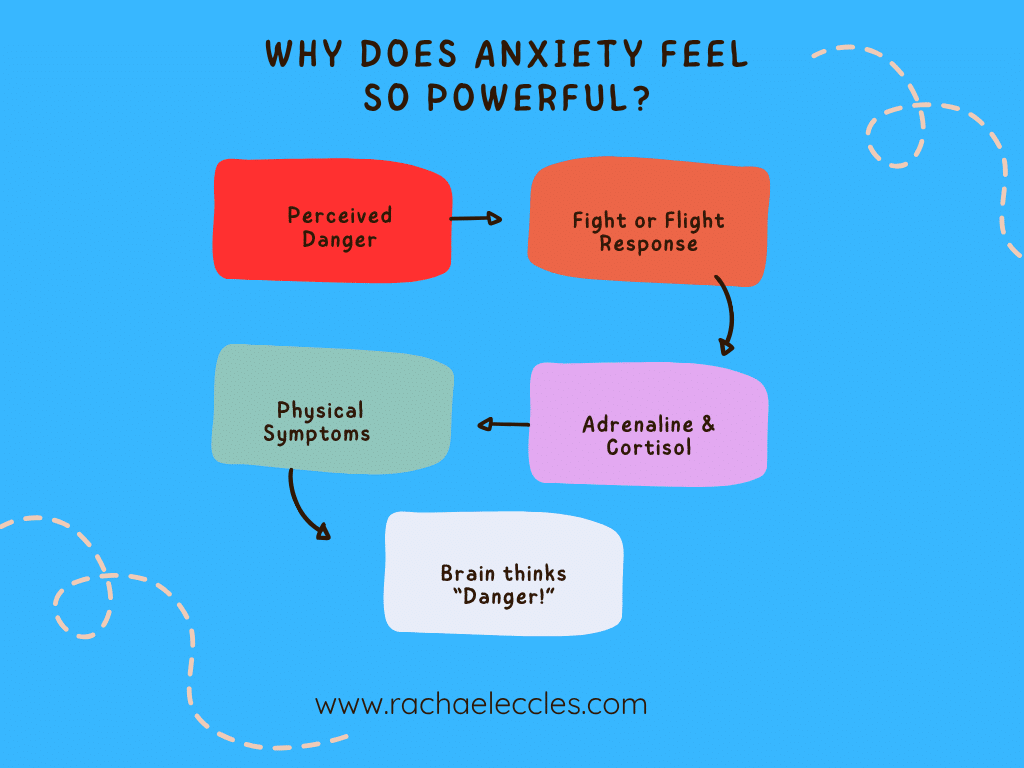
Our minds and bodies are designed to react quickly to danger. If there is a perceived threat to our safety, the sympathetic nervous system engages and gives us a boost of adrenaline and cortisol. This is useful in a situation where there is real danger, the hormones give our brain and muscles focus and energy to escape the danger quickly. The problem with modern day anxiety is that this fight of flight response can become over-sensitive and may become activated in situations where there is no threat and there is no danger, only perhaps a collection of thoughts and worries in our minds.
Because the fight or flight response is triggered by our powerful survival instinct, it can feel quite overwhelming to the anxious person. The last thing you need when experiencing anxiety is a massive boost of cortisol but this is exactly what happens and why anxiety feels so overwhelming. The key to overcoming anxiety is to gradually teach your mind and body to change this anxious response, and this is something that can be fully achieved through practice.
Why Does Anxiety Keep Coming Back?
(The Anxiety Cycle)
Some people notice that anxiety keeps returning, even when there is no obvious reason for it. This happens because the mind and body learn to respond anxiously and keep repeating the same responses automatically. The more you experience this anxiety, the stronger the automatic responses can become.
Because we are creatures of habit, the same anxiety response tends to repeat, even when you consciously know there is nothing to fear. Maybe you even tell yourself everything is okay, yet the anxiety still goes full throttle. When anxiety becomes a habit response in this way, the habit needs to be changed, and that can be achieved with practice. Understanding the anxiety cycle and how it works is a good starting point to understanding how to change it.
The Anxiety Cycle
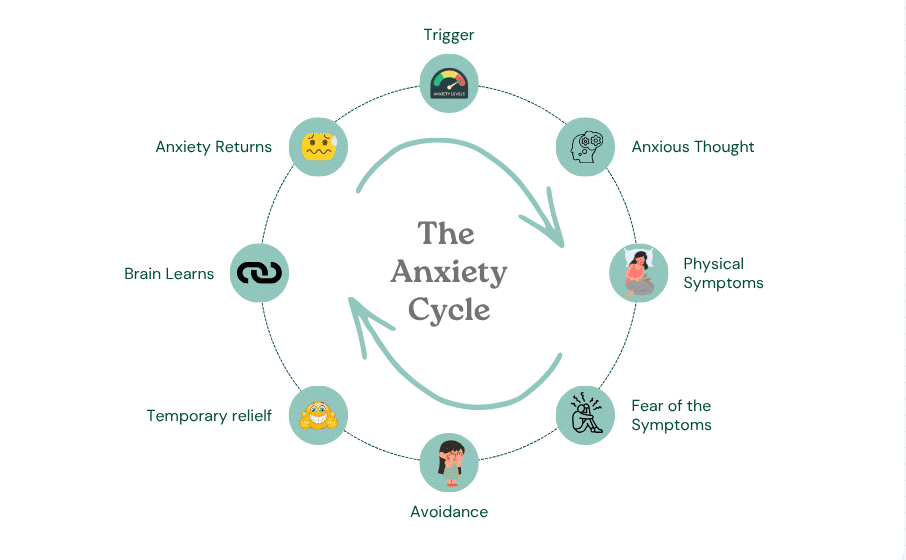
If you have anxiety you will probably already know that it becomes a cycle of fear. It may start with a trigger such as a situation, feeling or thought. Then there is a reaction to this trigger where you may think a negative thought and question ‘why am I feeling this way?’
This focus and examination of the feeling or thought feeds the anxiety, making it stronger. When you feel this way you may instinctively attempt to get out of this uncomfortable situation that is making you anxious. As you try to avoid the situation that is making you feel anxious this gives you some temporary relief, but it also makes it worse. This avoidance makes the fear something that you don’t control anymore, you don’t manage it, you run away from it, and that gives it much more power over you.
Trigger: You have a worrying thought, feeling or actual situation in life.
Anxious Thoughts: You start wondering and questioning why you feel nervous and anxious.
Physical Symptoms: You notice sensations such as your heart going faster and this makes you more anxious.
Fear of the Symptoms: Because you mentally zoom in and analyze the feelings and thoughts, this seems to magnify them and make you feel worse.
Avoidance: Because you don’t want to feel that way you try to avoid the situation or circumstances that might cause it to recur
Temporary Relief: Avoiding the triggers and sensations altogether gives you temporary relief from the anxiety symptoms.
Your Brain Learns Avoidance is Key: Each time you try to avoid things that make you anxious your belief that avoidance kept you safe is reinforced. This makes the anxiety even more likely to happen again and again because your brain associates anxiety with danger and avoidance with safely. This can keep you trapped in avoidance of anxiety and this means you miss out on the opportunity to learn a new response, that there is actually nothing to fear.
Breaking the Anxiety Cycle is The Key to Recovery
Our bodies and brains like to keep repeating the same things on autopilot – this is how habits start and are continued without you even consciously thinking about them a lot of the time. Anxiety can also become an automated habit response.
The key to overcoming your anxiety is learning a new response to replace the anxious auto-reactions. Every time you respond calmly, instead of reacting automatically, you teach your brain to know that you are safe and secure, and the new calm reaction gradually becomes automatic too, replacing the old anxious response. With practice the calm response happens on its own and the anxiety fades
How to Overcome Anxiety Naturally
Improve Your Sleep
Poor sleep can make anxiety worse, and anxiety can make sleep poor. Insufficient sleep also increases stress levels. Feeling anxious makes it virtually impossible to go to sleep but there are ways to help. A bedtime routine can actually be incredibly effective. It isn’t something that tends to work immediately, but with repetition the mind and body become more prepared for sleep and start to associate bedtime with relaxation and sleep.
Going to bed at the same time each night, making your bedroom as comfortable as possible and reducing screen time for a couple of hours before you sleep, can help. You could also try listening to a relaxing audio such as self hypnosis or meditation to help you drift off to sleep.
Exercise Regularly
To a lot of people this sounds hard to believe, but exercise really does reduce stress by reducing and releasing hormones like cortisol. Exercise also helps us use the adrenaline that comes with anxiety. Choose a type of exercise you can maintain, it might be going to the gym, but if that doesn’t appeal to you, you could try walking, cycling or rowing, for example.
Relaxation
If you have anxiety you may be very tense as a default. Learning some relaxation techniques can help you let go of physical tension and calm your mind. Our hypnosis audios often start with progressive muscle relaxation and we have some free ones for you to try. Learning to relax well can help you calm anxious feelings more easily through practicing relaxing your body and mind.
Practice Meditation & Mindfulness
Meditation involves sitting with your thoughts and observing them without getting involved with them. With regular practice, this can result in a calmer, more peaceful mind. Mindfulness involves maintaining your focus on the moment of now, letting the thoughts pass by without getting involved with them. Mindfulness is a practice you can do simultaneously when doing other things such as household chores or going for a walk, the idea is to keep your focus simply on the task at hand and not let your mind wander off.
Each of these practices is incredibly effective for easing anxiety. Essentially when practicing mindfulness or starting a daily meditation practice, you are giving your mind a break from anxiety. The more you do this, the more your mind will naturally achieve this calm mental state in day to day life. Again, this is not something you will gain instant results from unless you have experience of these practices, but the results build gradually. You can also try a meditation audio which makes it easier to achieve a calm state as you are guided through the process.
Try Hypnosis
Hypnosis aims to change the automatic reactions we have in our subconscious mind. This can be helpful in breaking the repetitive anxious responses and reinforcing new calmer ways of reacting. Many people also find self hypnosis reduces stress, physical tension and helps them sleep. Using hypnosis can help you to feel calmer, sleep better and feel confident in day to day life. You may notice that situations that used to make you anxious are now are no longer a problem for you.
Breathing
When you have anxiety your breathing can become irregular which can make anxiety symptoms feel worse. Breathing quickly or too shallow can make you feel dizzy and create a panic response. Slowing your breathing down helps stop this from happening.
Practicing breathing exercises can be very beneficial and a helpful tool to calm yourself when in an anxious state. Often anxiety sufferers feel they are not getting enough oxygen, they feel an urge to take a deep breath but they should first breathe out fully, letting go of the breath and dropping the shoulders. This is because if you have anxiety you may hold your breath without realizing and not fully exhale.
Slow breathing and letting your shoulders drop as you breathe out each exhalation, dropping the shoulders as you breathe out can help a great deal. Try to make each exhale longer than the inhale, this can help you avoid hyperventilating which is a common issue with anxiety.
Grounding Techniques
If you find anxious thoughts appearing in your mind, try grounding techniques to bring your attention back to the present moment and interrupt the negative thought process. The classic technique is to notice 5 things you can see, four things you can touch, three you can hear and two you can smell and one you can taste. This simple exercise helps to distract you from anxiety and break the cycle. It is simple but highly effective.
Challenging Anxious Thoughts
If you have anxiety you may find negative thoughts make your anxiety worse. You may think something terrible is happening if you notice a physical symptom of your anxiety, and this gets you mentally wrapped up in the anxiety cycle. Learning to control your thoughts and not let them carry you away can help you conquer anxiety. If you notice yourself worrying or catastrophizing, try gently challenging those thoughts.
You can ask yourself, where is the evidence? Is this true? Or think what you would say to a friend if they said they felt this way. Remind yourself that these thoughts are just a pattern and you will no longer be caught up in it. You can become more aware of where your mind is wandering and focus on something neutral or positive.
Reducing Avoidance
It is tempting to try to avoid situations that make you anxious but the relief is only ever temporary with this strategy. All types of fear, phobia and anxiety are made worse by avoidance. The habit response of anxiety is reinforced and strengthened if you keep avoiding it.
Why does this happen?
Every time you avoid something that you fear will make you feel anxious, your subconscious mind automatically associates the avoidance as crucial for your safety. Your mind makes the connection that you are avoiding the situation because of danger. Your subconscious mind accepts without question, it must have been dangerous. This subconscious response becomes automated and the longer it continues the harder it is to change.
Facing your fear by not avoiding things that make you anxious, helps you by giving you the opportunity to learn a different response, and for the automatic “danger” reaction to be challenged and alternative responses learned. Start with small steps, facing small challenges here and there will build your confidence.
Building Confidence
Every time you face your anxiety rather than avoiding it, you prove to yourself that you can do it. Every small success is a win for you as it helps to build your self-belief and confidence that you can cope.
Confidence is a very broad term, it isn’t about never having anxiety, but in essence confidence is simply feeling able to handle things even if there was some anxiety. It helps you to stop reacting to anxiety and stop being afraid of it. Gradually your confidence replaces the anxious response, this means anxiety fades, becomes weaker and less frequent.
Lifestyle Changes
If you have anxiety you are probably aware that you may have developed some imbalance in your life. Through trying to cope each day and finding life difficult, it can create a feeling of chaos and of just getting by. You may have stopped or reduced certain activities you used to enjoy or neglected self-care because you feel you have no energy or enthusiasm, because it all goes towards just trying to cope with the anxiety.
Routines
Taking the time to establish a good balanced daily routine can bring many benefits. Having a good healthy routine that includes eating healthy, getting some fresh air and exercise, drinking plenty of water and engaging with hobbies and social opportunities will create balance and can help with your general wellbeing and confidence. Spending time in nature can also help reduce stress and anxiety and increase feelings of calm, wellbeing and connection with the world.
When you are anxious it feels natural to withdraw and minimize what you have to do each day. For many people it is almost as if you are retreating within yourself and trying to solve the puzzle of why you have anxiety. The reality is that only a moderate amount of self reflection may be useful, you may or may not get some insight into the causes of your anxiety, sometimes it is just a habit response. It may be that the key to solving your anxiety problem is distraction rather than inward reflection.
Caffeine
Do you drink a lot of coffee? Did you know that coffee can make you feel anxious? The caffeine can create a jittery effect in your body and make you feel noticeable effects such as shakiness, heart racing or fluttering. Some people are more sensitive to caffeine, if you have anxiety it might be worth cutting down on coffee to see if it helps reduce your anxiety levels.
Alcohol
Sometimes drinking alcohol is seen as a way to calm down, but it actually only offers a temporary effect and it has a negative effect on your sleep quality. Using alcohol to ease anxiety can create a cycle of anxious responses where you feel worse and any relief you get is temporary. The next day after drinking alcohol you may have worse anxiety because it can create an anxious feeling as the alcohol leaves your body.
Can Hypnosis Help Anxiety?
Yes. Hypnosis can be a very effective way to reduce anxiety. It can help you learn to respond in a more calm, confident way to situations that used to feel overwhelming. Hypnosis works by influencing our automatic reactions, so it can help change that instant anxious subconscious response to a calm, confident response. Some people notice a positive difference after just one session, for others it builds more gradually.
How Does Hypnosis Help?
As well as deeply relaxing you, hypnosis helps reduce anxiety by building your confidence and self-belief that you can handle challenges with confidence and resilience. It may help you mentally rehearse calmer responses in potentially triggering situations. Many hypnosis sessions include future pacing techniques, where you may visualize yourself in the future successfully coping in situations that used to be very challenging. You may imagine yourself free of anxiety, you may look back and see just how you achieved it, and this can be inspiring and can even give you clues and ideas of things to do in your life that may help you feel happier, calmer and more confident.
Research suggests hypnosis may influence how the brain processes emotion and focuses attention. During hypnosis you become very absorbed in the experience. A hypnotic trance is a highly focused mental state that can make it easier to accept positive, calming suggestions and to let go of anxious reactions and habitual ways of thinking. Brain imaging studies have found changes in areas of the brain involved in attention, emotional regulation and self awareness, which may explain why hypnosis feels different from simply relaxing.
Will I Lose Control?
No. In hypnosis you are aware of everything that is happening around you and you cannot be made to do anything you would not want to. Some people worry that they’ll be unconscious, but most people remain aware throughout and remember everything afterwards. If you heard something in the hypnosis that you didn’t like, you would automatically reject it. You are also free to stop the session any time you wanted. Many people describe being in hypnosis as similar to a daydream, it is pleasant and relaxing.
Facing your fears
Hypnosis can also help you have the strength to face your anxiety and therefore break the anxious patterns. The calming and relaxing hypnosis reduces your stress and the confidence building techniques help you believe you can and will overcome this. This makes it easier for you to gradually test out a triggering scenario. This gradual desensitization step by step process, breaks down the anxious responses freeing you from the repetitive pattern of the anxiety cycle.
What happens in a session?
A hypnosis session usually begins with an induction, this is where you are guided into a deeply relaxed physical and mental state. It may feel a little like a daydream and some people experience sensations like their arms and legs feeling heavy, some experience vivid visualizations. Relaxing this deeply is in itself very beneficial for anxiety, but in a hypnosis specifically for anxiety there will be ideas and suggestions on changing the anxious response to help you break free from the cycle of anxiety. Find out more in our article on what hypnosis feels like.
Using an anxiety hypnosis download will help to build your self confidence to trust yourself and believe in yourself and your ability to cope. After the hypnosis you can apply what you’ve learned and test it out in real life situations to see what changed. Each time you face a situation that used to make you anxious, the calmer response builds your confidence, and the anxiety reduces more and more.
Be Safe
Hypnosis is a self help tool that can help you change your anxious responses. Some people notice changes after just one or two sessions, for others it takes longer. However, if your anxiety is severe or affecting your ability to function in daily life it is important to seek advice from your GP or doctor because hypnosis is intended to complement rather than replace appropriate medical care. Never use hypnosis when driving or doing anything that requires your concentration.
How Long Does it Take to Overcome Anxiety?
It varies from person to person, there is no set timescale. Working on your anxiety is a step by step process but during this time you should notice gradual improvements. Some techniques like breathing slowly, practicing meditation and hypnosis may bring instant relief. Lasting change tends to happen through repeated practice. Learning to become a master of your own thoughts and reactions is key to long term freedom from excessive anxiety.
What Will It Feel Like to Overcome Anxiety?
Overcoming anxiety is not something that happens instantly overnight; it is a gradual process. This is actually a positive thing because the changes are more likely to last long-term because you gradually let go of triggers and heightened responses and learn to feel calmer and more confident.
When you are on the road to recovery you may notice small changes changes, such as doing something calmly than used to cause anxiety. You may realize you have reacted automatically in an effortless calm way without even thinking about it. Small changes like this are the building blocks of recovery, and these victories lead to a calmer happier life for you, where you can cope with challenges with confidence and self-belief.
Recovering from anxiety doesn’t mean you will never feel anxious again, anxiety is after all, a normal response in certain situations. Instead, overcoming your anxiety means being free from unnecessary or excessive anxiety, and having the confidence to know and truly believe that you can cope, just as easily as anyone else. If you notice a feeling of anxiety, which happens to everyone from time to time, you can let it go and allow it to pass without getting caught in the anxiety cycle.
Many people may notice signs of recovery such as:
- Enjoying activities that you used to struggle with
- No longer avoiding things due to fear
- Looking forward to things more
- Feeling calmer and more relaxed
- Feeling optimistic
- Enjoying life
- Worrying less
- Sleeping better
- Feeling confident in situations that used to make you anxious
- Feeling more in control of your emotions
- Feeling more aware and in charge of your thoughts.
Can Anxiety go Away on its Own?
Yes. It can but often the response is a habit and this means certain triggers may cause the anxiety to return. Learning methods of calming yourself and not getting caught up in the cycle of anxiety can help you keep anxiety under control long-term. The goal is to stop anxiety dictating your life and limiting you.
What Makes Anxiety Worse?
Some of the habits and coping strategies that anxious people may lean on can actually make their anxiety worse. If you have anxiety, you may hold your breath due to tension and fear, this can upset the natural rhythm of your breath and increase muscle tension. Having anxiety can sometimes mean life gets a little chaotic as you minimize activities in an attempt to get the essentials done. You may drink too much coffee, overthink and ruminate, and get poor or insufficient sleep or drink too much alcohol.
When Should you Seek Professional Support?
If anxiety is affecting you in a way where you can’t do your job or function in day to day life or if you feel unable to cope, please speak to your doctor, GP or other healthcare professional. Sometimes anxiety comes hand in hand with depression. If you have dark thoughts and you are struggling to cope with anxiety please seek help.
Take a Positive Step
If you are ready to overcome your anxiety explore our range of hypnosis downloads, guided meditations and mindfulness audios. Every positive step you take can help teach your mind and body to learn a new calmer response to challenging situations. Hypnosis and meditation can calm you and make it easier to break the anxious connections and enjoy a feeling of calm, confidence
Want to Learn More?
If you are interested in understanding how hypnosis works for anxiety and if it is right for you, read our guide to Hypnosis for Anxiety.
Useful Links
Practical Steps to Overcome Anxiety Now
Mindfulness meditation for stress and anxiety
- What is hypnosis
- How does hypnosis work
- What does hypnosis feel like
- Is hypnosis safe
- Can anyone be hypnotized
Anxiety FAQs
Can hypnosis help anxiety?
Yes. Hypnosis is a very calming experience. With practice you can go deeper into the relaxation and experience anxiety relief and inner calm. The hypnotic suggestions and post-hypnotic suggestions, help to train your mind to break the old anxious cycle and replace the anxious response with a calm, confident response instead.
Can anxiety comes out of nowhere?
Yes. If you have anxiety it can feel that the anxious reaction has appeared for no reason whatsoever. This is because your brain has created an automatic reaction, it is simply a habit reaction. The good news is that habits can be broken, and changing these anxious reactions can be achieved successfully.
Can anxiety make you feel dizzy?
Yes. Especially if you are breathing too fast or shallow breathing. It is a common reaction to breathe faster when you are anxious and this can cause hyperventilation, which in turn causes dizziness. Alternatively breathing shallowly, means getting slightly too little oxygen which can also make you feel a little bit dizzy. Learning to breathe slowly, to let the breath fully out and make exhalations longer than inhalations can help you feel better.
Can anxiety cause chest tightness?
Yes. This may be connected to breathing to quickly or it can be from being physically very tense. When you are anxious you tend to tense up your muscles without even realizing you are doing it. Learning to relax well, can help you feel more comfortable.
Can anxiety make your heart race?
Yes. This can also be connected to the way you are breathing. Normally you let breathing happen automatically but when you are anxious you may focus on your breath too much and over or under breath and this can make your heart race a little. The feeling of anxiety can also trigger the fight or flight response which causes a release of hormones such as cortisol and adrenaline and these can also make your heart race.
Can anxiety cause nausea?
Yes. It may accompany a feeling of dread and can also be connected to feeling dizzy. These symptoms can be quite frightening and if your anxious mind is running free it may think something bad is happening, when in fact it is simply cause by the anxiety and nothing to be afraid of.
Can anxiety make you feel like you are dying?
Yes. The anxious reactions and sensations can be very powerful and frightening. This is part of your body’s response to danger and it is simply over-reacting. You may notice dizziness breathlessness and you heart racing and these sensations can feel like something terrible is happening. These feelings and symptoms are often caused by the fight or flight response and when you calm down the sensations go. If you experienced new, concerning, persistent or severe symptoms you should of course seek medical treatment.